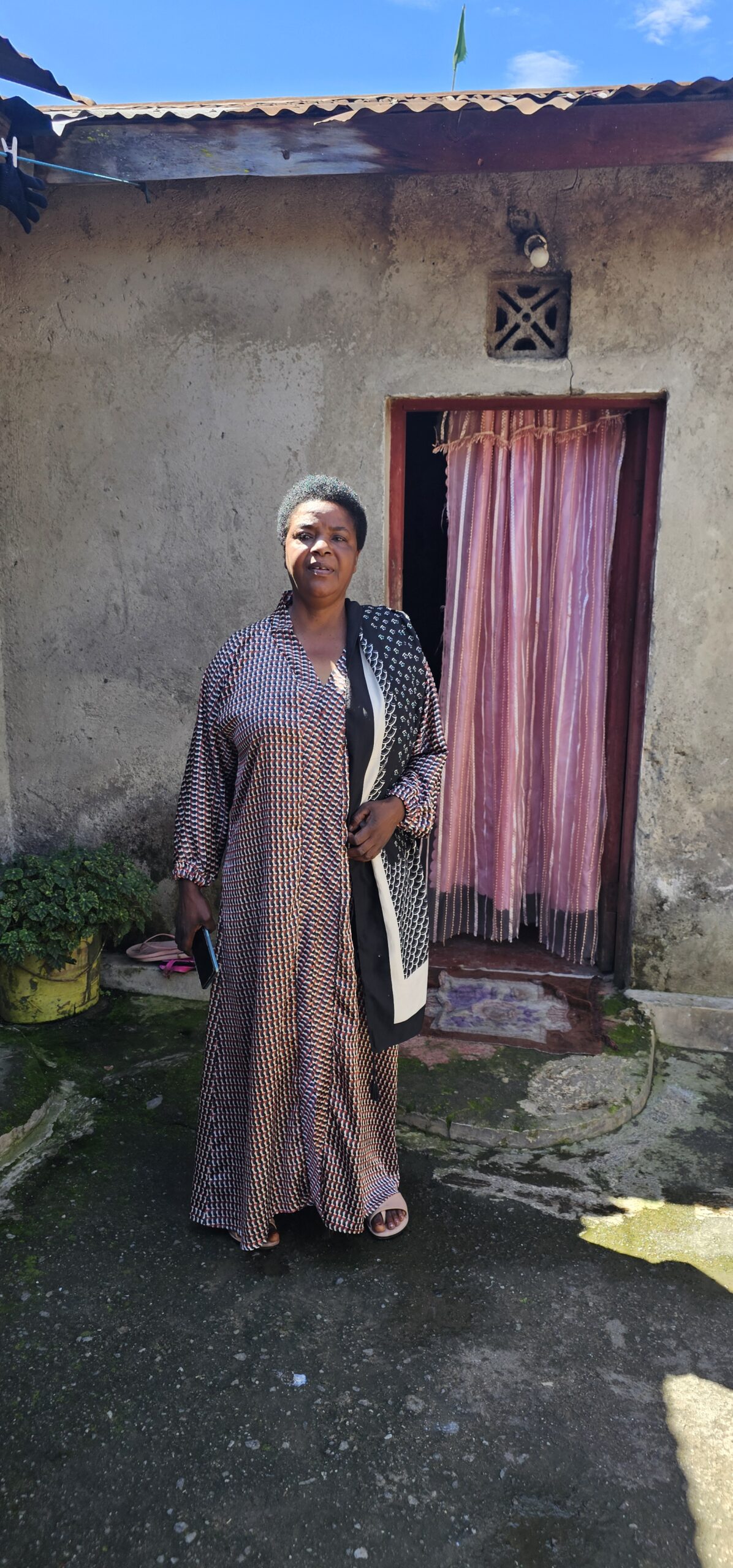
As we celebrate International Women’s Day, please read Alice’s Story of Resilience and Transformation. Alice is 54 years old and a farmer by profession. When Africa Bridge began implementing its project activities in the Isongole Ward (Idweli Village), Alice’s household was identified as one of the families caring for Most Vulnerable Children. She is a widow and was raising five children—four boys and one girl—on her own.
Before the participating in the co-op program of Africa Bridge, Alice mainly cultivated potatoes for both consumption and sale. However, the income she earned from selling potatoes was not sufficient to meet her family’s needs. Most of the money was used to cover small school expenses for her children, and only a small portion was allocated to daily household necessities.
Reflecting on her situation, Alice shared:
“My husband was a hard worker; he used to provide for many of our family’s needs. After he passed away, life became much more difficult for me because I had to take care of all five children by myself. We only had a small plot of land for cultivating potatoes, which was not enough to support our family. Potato farming is also seasonal and subject to price fluctuations—sometimes you make a profit, and sometimes you incur a loss.”
She decided to join the cooperative because she already had experience in potato farming. Through the project, Africa Bridge supported the group to rent and expand farmland. As a result, Alice increased her cultivated land from half an acre to one and a half acres.
During the first phase of the potato project, most cooperative members did not benefit because the crops dried up in the fields. Despite this setback, Alice and her fellow cooperative members did not give up. They decided to try the following season again—and this time, their efforts paid off. The potatoes thrived, resulting in a good harvest. From that point on, Alice began to experience a real transformation in her family’s life.
With the income she earned from selling potatoes, Alice made significant improvements to her home. She replaced the mud floor with a cement floor, improved school support for her children, built a proper toilet, purchased modern furniture, and a television and radio.
Over time, the project enabled her to move from renting farmland to purchasing her own plot. She also diversified her income by investing in livestock and now keeps pigs and chickens.
Today, Alice lives with one grandchild, as all her children have grown up, established their own homes, and are now self-reliant. They also support and care for her. She concludes with gratitude:
“I thank Africa Bridge because at a time when life seemed impossible for my family, they gave me hope and showed me that it was still possible to move forward.”
International Women’s Day